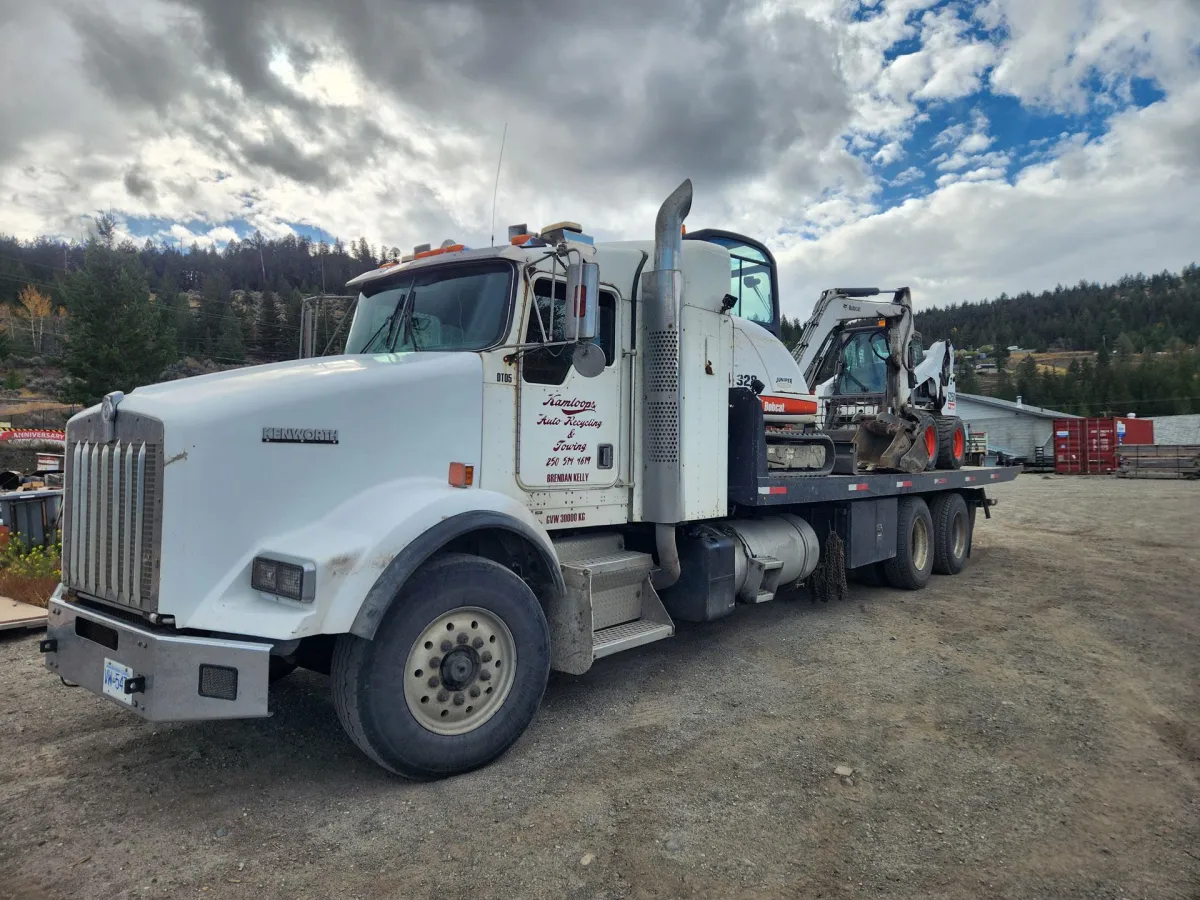
Is Towing Charged by Distance or Time?
Introduction
One of the most common questions drivers ask when calling a tow truck is whether towing is charged by distance or by time. The answer matters—because it affects how much you’ll pay and what kind of estimate you should expect over the phone.
In reality, towing service cost is not calculated using just one method. Most towing companies use a pricing structure that combines distance, time, and service complexity. This article explains how towing is charged, when distance matters more than time, when time-based charges apply, and how this works for drivers in Kamloops, BC.
The Short Answer: Towing Is Usually Charged by Distance, Not Time
For standard towing situations, towing is primarily charged by distance, not by how long the tow takes.
Most towing services calculate cost using:
• A base hookup or call-out fee
• A distance-based charge after a minimum included range
This means if your vehicle is towed farther, the cost increases—even if the tow itself doesn’t take very long.
For example, a short tow across Kamloops will usually cost less than a tow that goes outside city limits, even if both tows take a similar amount of time to complete.
Why Distance-Based Pricing Is the Industry Standard
Distance-based pricing exists because it reflects real operating costs.
The farther a vehicle is towed, the more the towing company spends on:
• Fuel
• Driver time
• Wear and tear on equipment
• Vehicle maintenance
Distance is also predictable. A towing company can estimate mileage more accurately than traffic delays or minor wait times, which makes distance-based pricing fairer and easier to explain to customers.
In Kamloops, where towing routes can include city roads, highways, and rural stretches, distance-based pricing helps keep quotes consistent.
When Time-Based Charges Do Apply
While distance is the main factor, time-based charges can still apply in certain situations. This is where many people get confused.
Time-based charges are usually added when the tow involves more than simple transport.
Common situations where time matters include:
• Vehicle recovery from a ditch or off-road area
• Accident recovery requiring cleanup or repositioning
• Waiting time due to blocked access or delayed vehicle release
• Complex hookups that require extra labor
In these cases, towing service cost may include an hourly or time-based component because the operator and equipment are tied up for longer than a standard tow.
Towing vs Recovery: Why the Difference Matters
Understanding the difference between towing and recovery helps explain why time-based charges sometimes apply.
Standard towing
This involves hooking up a vehicle and transporting it from point A to point B. These jobs are mostly distance-based.
Recovery towing
This involves freeing a vehicle before it can be towed—such as pulling it out of a ditch, snowbank, or off-road area. Recovery requires extra equipment, skill, and time.
Recovery work is where time-based pricing becomes more common, because the effort involved can’t be measured by distance alone.
Does Traffic or Delays Increase Towing Cost?
In most standard towing situations, traffic delays do not significantly affect cost.
If a tow takes longer due to traffic but the distance is short, the price usually doesn’t change much. Distance remains the main factor.
However, extended delays can affect cost if:
• The tow truck must wait for access to the vehicle
• Police or accident scene clearance delays the hookup
• The operator is required to stay on-site for an extended period
These situations may trigger waiting-time charges, which are time-based rather than distance-based.
How After-Hours and Emergency Towing Are Charged
Emergency towing is not typically charged by time alone—but it does affect pricing.
After-hours towing costs more because of:
• On-call staffing
• Immediate dispatch
• Higher operational readiness
The increased cost usually shows up as a higher base fee or emergency surcharge, not an hourly time charge. Distance still plays a role, but the starting price is higher due to urgency.
In Kamloops, weather-related emergencies—such as snow and icy roads—can also affect how towing service cost is calculated.
Why Two Similar Tows Can Cost Different Amounts
Drivers are often surprised when two tows that seem similar end up with different costs.
This usually happens because:
• One tow involved recovery while the other did not
• One tow required a flatbed while the other used a wheel-lift
• One occurred after hours or during bad weather
• One involved waiting time or access issues
Even when distance is the same, time and complexity can change the final cost.
How to Ask the Right Questions When Requesting a Tow
To avoid confusion, it helps to ask specific questions when calling a towing service.
Before the tow begins, consider asking:
• Is the towing cost based on distance or recovery time?
• Does the base fee include a certain distance?
• Are there extra charges for recovery or waiting time?
• Does after-hours service change the pricing?
Clear communication helps ensure the estimate you receive matches the final towing service cost.
Local Experience and Pricing Transparency in Kamloops
Local towing companies understand how Kamloops roads, traffic patterns, and weather conditions affect towing situations. That experience helps them provide more accurate estimates and avoid unnecessary delays that could increase cost.
Many drivers in Kamloops rely on established providers like Kamloops Auto Recycling Ltd because local knowledge leads to smoother service and clearer pricing explanations.
Frequently Asked Questions About Distance vs Time-Based Towing
Is towing charged by distance or time?
Most towing is charged by distance, with time-based charges applied only in recovery or extended service situations.
Do tow trucks charge per hour?
Hourly charges usually apply only for recovery work, waiting time, or complex situations—not standard tows.
Does traffic increase towing cost?
Traffic delays alone usually don’t affect cost unless they cause extended waiting time.
Is long-distance towing cheaper per kilometer?
Sometimes. Longer tows may have lower per-kilometer rates but higher total cost due to distance.
Can I get an estimate before the tow starts?
Yes, and you should. Estimates are based on known details and may change if conditions differ.
Final Thoughts: Distance vs Time in Towing Charges
So, is towing charged by distance or time? In most cases, distance is the primary pricing factor, while time-based charges apply only when extra labor, recovery, or waiting is involved.
Understanding this difference helps you interpret quotes, ask better questions, and avoid surprises. For drivers in Kamloops, working with an experienced local provider such as Kamloops Auto Recycling Ltd means clearer explanations and pricing that reflects the actual work required—not guesswork.
